First published in Selling From the Beach on November 2, 2026.
The short version
So don't build the store. Not this Q4. Not "as a test." Just don't.
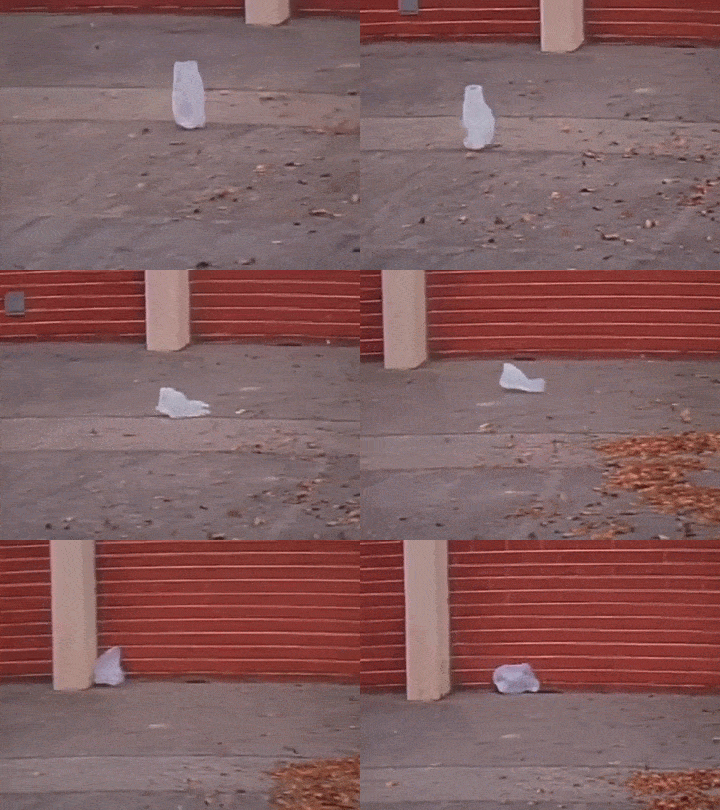
In 2017, Denmark's environmental agency asked a team at the Technical University of Denmark which grocery bag is best for the planet. They counted everything: growing the cotton, making the bag, shipping it, throwing it out.
The plain plastic bag, reused once as a bin liner, won. The organic cotton tote has to go shopping 149 times just to match it on carbon. Counting everything they measured, 20,000 times. Once a week, that's 384 years.
The villain was the efficient one. We just never saw the cotton farm.
Which brings us to Amazon… Amazon is our plastic bag.
Holiday fees started October 15, 2026, and sellers I know are using them as the reason to finally build their own stores. Get off Amazon. Stop feeding the big guy. DIVERSIFY. My first thought was "maybe it's time to pump our DTC."
So I had AI price it out. A $20 product, holiday rates on both sides, every box to the closest zone USPS has.
Cost to sell one unit:
- 8 oz: Amazon $6.87, your own store $11.41
- 1 lb: Amazon $8.06, your own store $12.09
- 2 lb: Amazon $9.37, your own store $12.47
- 3 lb: Amazon $10.33, your own store $13.12
(Amazon: 15% referral fee plus the FBA fee. Your store: card fees, average pick and pack and USPS Ground Advantage.)
There's no ad spend in there. A customer who finds your store for free still costs you more than one Amazon found for you.
"Fine, I'll ship my store orders out of FBA." Amazon charges $9.54 to ship one 1 lb unit for your store. Sell that same unit on Amazon and the FBA fee is $5.06. Same box, same shelf, almost double the price when the customer is yours (MCF aint nice).
Owning the customer doesn't get you out of it either. Hims & Hers is the DTC dream. It still spent 39.2% of its revenue on marketing in 2025.
Even Shopify gave up. It used to warn merchants that Amazon's Buy with Prime could break Shopify's terms. In 2023 it put Prime checkout inside Shopify stores. Amazon says stores that add it get 20% more shoppers placing orders. The thing that makes shoppers trust your store is Amazon.
So don't build the store. Not this Q4. Not "as a test." Just don't.
When do you switch? When your store's cost per order, ads included, beats Amazon's, and most of your store orders show up without an ad. The tote does beat the plastic bag eventually. It just takes 20,000 trips.
Hating the big guy feels good. But the big guy often ships it cheaper, faster and better than we can.
Stick with the one that feeds you.
How much does the Amazon referral fee take from a $20 product?
As of November 25, 2026, Amazon's US pricing page sets the referral fee as a percentage of the sales price by category, and in categories that charge "15% for products with a total sales price greater than $10.00", a $20 product pays $3.00.
At 1 lb, the table splits Amazon's $8.06 into the referral fee and the FBA fee, then shows how much more Multichannel Fulfillment (MCF) and an own store cost. Results are rounded to the nearest cent, and the multiple to one decimal.
| Step | What | Math | Result |
|---|---|---|---|
| 1 | Referral fee at 15% | $20.00 times 0.15 | $3.00 |
| 2 | FBA fee inside Amazon's $8.06 total | $8.06 minus $3.00 | $5.06 |
| 3 | Extra paid to ship a store order through MCF | $9.54 minus $5.06 | $4.48 |
| 4 | MCF fee as a multiple of the FBA fee | $9.54 divided by $5.06 | 1.9 times |
| 5 | Own store cost above Amazon at 1 lb | $12.09 minus $8.06 | $4.03 |
What is MCF, the fee Amazon charges to ship own store orders?
MCF is Amazon's service that lets a seller use one network to "pick, pack, and ship orders for multiple sales channels", such as a website.
What is Buy with Prime for an own store, and what does the 20% mean?
Buy with Prime is an Amazon option that lets U.S.-based Prime members "shop directly from participating online stores using the Prime shopping benefits they know and love".
Amazon's Buy with Prime page, updated October 20, 2025, says the 20% "measures the average increase in shoppers who placed an order when Buy with Prime was a purchase option versus when it was not, during the same time period."
How much did Hims & Hers, a brand with its own store, spend on marketing in 2025?
In its annual report for 2025, Hims & Hers lists "Marketing expenses were $919.3 million for the year ended December 31, 2025" and "Revenue was $2,347.6 million for the year ended December 31, 2025".
The table divides marketing by revenue, in millions of dollars, and rounds the percent to one decimal place.
| Step | What | Math | Result |
|---|---|---|---|
| 1 | Marketing share of revenue | 919.3 divided by 2,347.6 | 0.3916 |
| 2 | Share as a percent | 0.3916 times 100 | 39.2% |