
Most struggling DTC brands think the answer is to push harder. Louder subject lines, bigger discounts, more urgency. The brands quietly printing money in 2026 are doing close to the opposite. They are not pushing the customer toward the product. They are reframing things so the customer already feels like they own it, or like they are already the kind of person who does.
That is the whole game, and it shows up in four small moves you can copy this week. None of them require a bigger ad budget. They are just better psychology. Here they are, with the reasoning underneath each one and exactly how to run it.
The one idea behind all four
Before the tactics, here is the thread that ties them together, because once you see it you will start finding your own versions. People do not part with money to get something nearly as readily as they act to avoid losing something they already feel is theirs. So the best brands quietly move the customer across that line first. They make the product, the money, or the effort feel already owned. Then the buy is not a decision to spend. It is a move to protect what is already theirs.
Play 1: Look human in a sea of AI
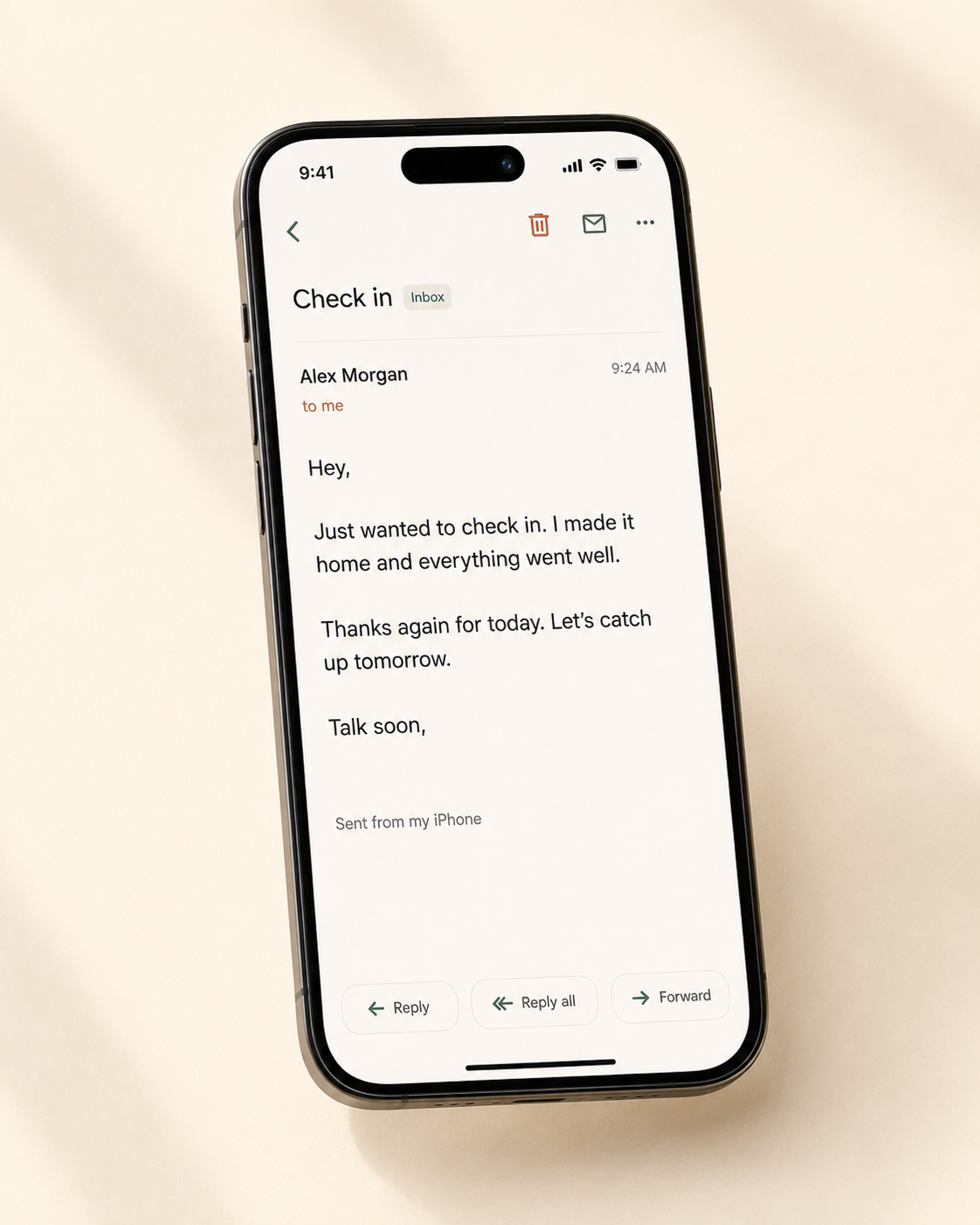
The simplest of the four. Add a line like "sent from my iPhone" to the bottom of a plain-text email.
That is it. In an inbox where every other message is a designed template blasted from a brand, a short text-only note that looks like a real person typed it on their phone stops the scroll. It reads like a friend wrote it, not a marketing system. And right now, when buyers assume most of what they read was generated by AI, looking genuinely human is a real edge.
How to run it:
- Send key emails as plain text, no header image, no fancy layout. Just words.
- Send from a real person's name (the founder works best), not "The Team."
- Use a lowercase, casual subject line, the kind you would actually text.
- Make the reply-to a real inbox someone reads. The magic dies if a human reply bounces.
- Keep it short. A real person on their phone does not write five paragraphs.
The founder welcome email and the post-purchase check-in are the best places to start. Those are the moments a human touch lands hardest.
Play 2: Frame the cart as an order already in motion
When someone abandons a cart, almost every brand sends the same thing: "Your cart is waiting." Look closely and you will see the problem. That sentence hands the whole decision back to the customer. The ball is in their court, the work is theirs to do, and so it sits.
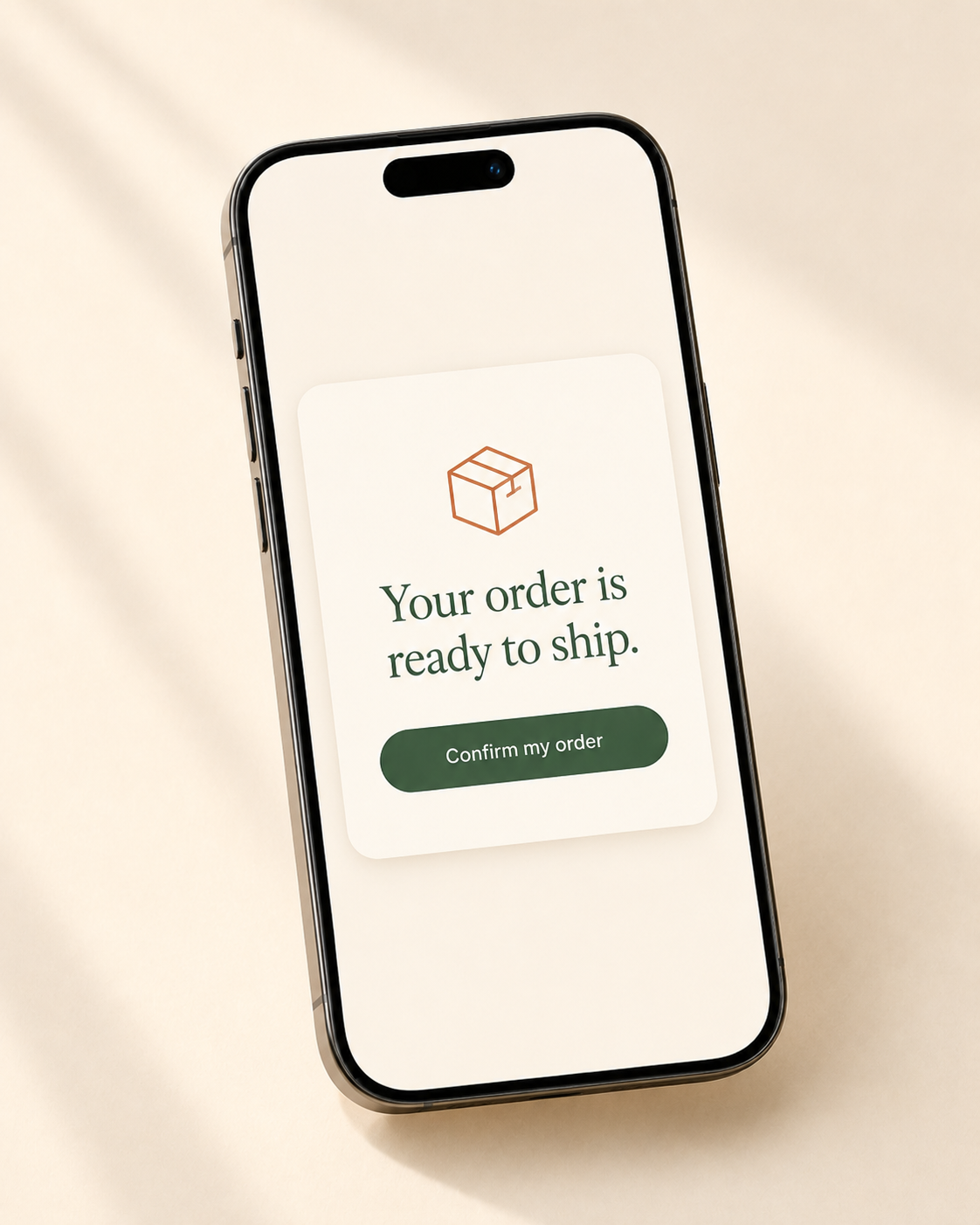
Flip the framing so the action feels already started. Wording like "Your order is ready to ship" makes it feel as though the order basically exists and all that is left is one quick confirmation. There is a person on the other end ready to pack it. You are not asking them to decide. You are asking them not to cancel something that already feels real.
How to run it (the honest version):
- Shift cart and abandonment copy from "waiting for you" to "ready to go": "Your order is ready," "We have your [product] set aside," "Just confirm and it ships."
- Keep it true. Do not claim they already paid or that a package is literally moving when it is not. The goal is to make the next step feel small and already underway, not to lie. Manufactured claims get found out and torch trust.
- Reduce the action to one tap. "Confirm my order" beats "Return to cart." The button should feel like finishing, not starting.
- Reinforce it visually: show the items boxed or bagged, not floating in a cart icon.
Play 3: Turn a discount into money they already have
Most brands offer "$10 off" or "20% off." It works a little, because everyone has been trained to chase a deal. But a discount is something the customer has to earn by buying. It is a gain, and gains are easy to walk away from.
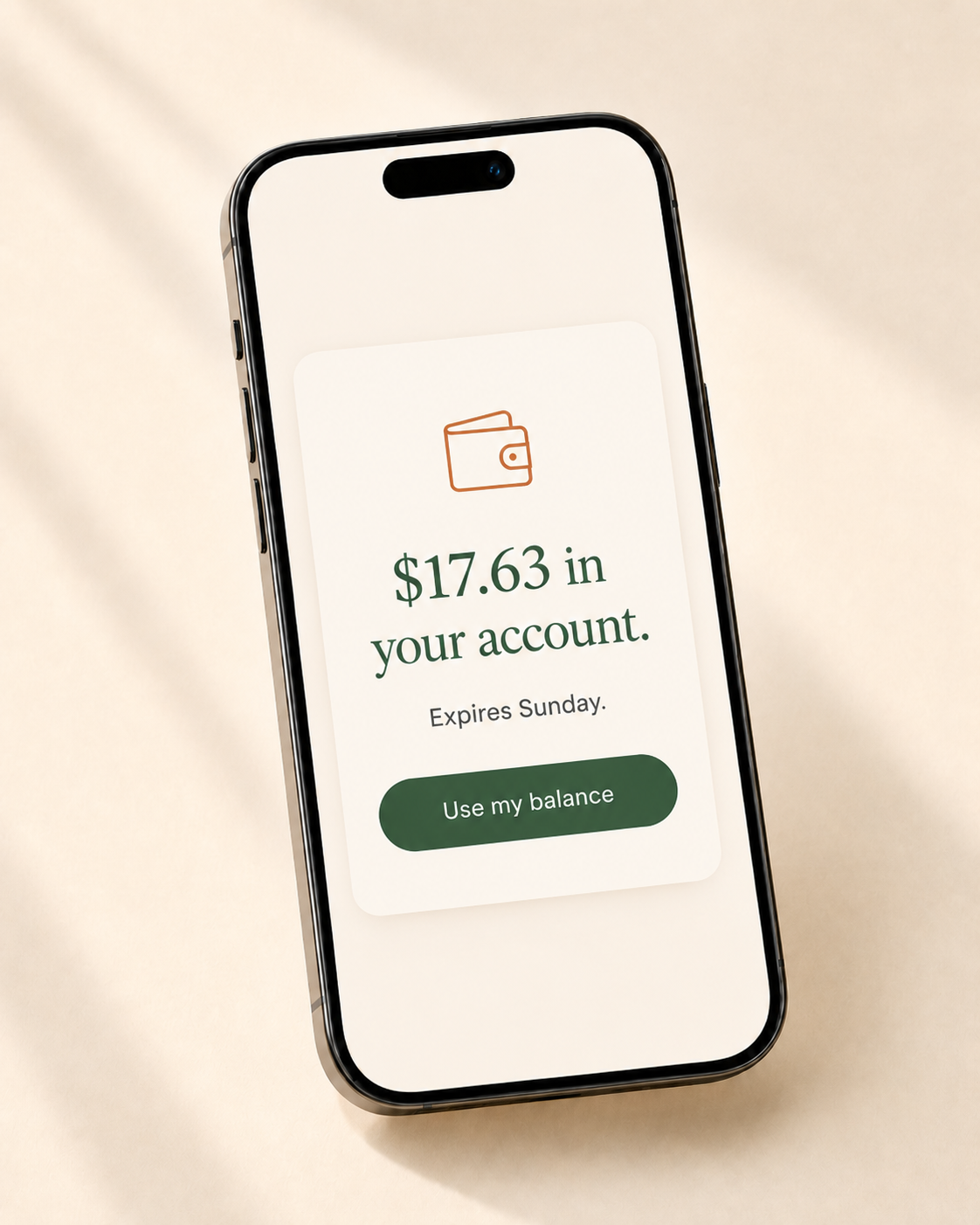
The stronger move is to frame that same value as money already sitting in their account. Instead of "20% off," the email says "You have $17.63 in your account." Now it is not a deal to chase. It is their money, and if they do not use it, they are leaving their own cash on the table. Walking away suddenly feels like losing something rather than passing on something.
The odd, specific number does real work too. "$17.63" reads like a true balance pulled from a system. "$20 off" reads like a marketing round number. Specific feels real, and real feels owned.
How to run it:
- Reframe promos as store credit or a loyalty balance, not a percentage. "You have $X in rewards" beats "X% off."
- Use a precise figure where you can, so it reads like a real account balance.
- Give it a real, honest expiry. Money you own that is about to disappear is the strongest version of this. "Your $17.63 expires Sunday."
- Show the balance in the account, in the email, and at checkout, so it follows them like something they possess.
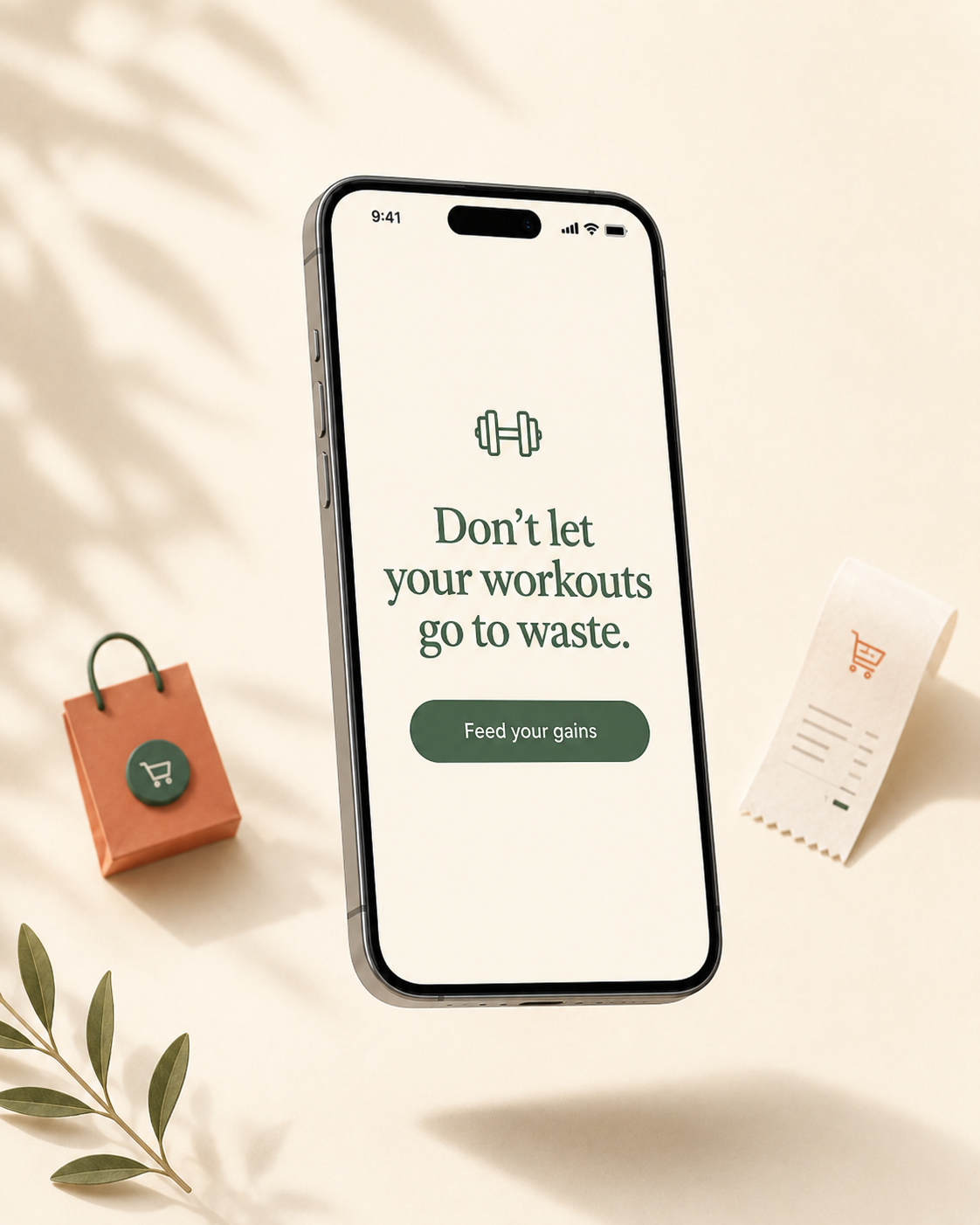
Play 4: Make not buying feel like wasting effort they already spent
This is the one that keeps customers for life, and it is the deepest of the four. People hate watching their own effort go to waste. So the best brands tie the product to effort the customer has already put in, and quietly point out that skipping the product wastes all of it.
Say you sell supplements to gym-goers. Weak version: "Our protein helps you build muscle." Strong version: "You train five days a week. Do not let those workouts go to waste by failing to feed your muscles properly." Suddenly the product is not a new expense. It is the thing that protects the months of effort they already sweated through. The customer does not want to lose what they have already built, so the decision makes itself.
How to run it in any niche:
- Golf: "You spent all season grooving that swing. Do not let cheap gear give your shots away on the course."
- Skincare: "You have been consistent for three months. This is what keeps that progress from sliding back."
- Coffee gear: "You buy good beans. Most of that flavour is lost to a mediocre grinder."
The pattern is always the same. Name the effort they already invested, then frame your product as the thing that stops that effort from being wasted.
The meta-move: sell the identity, not the item
Step back and all four are versions of one idea. Do not sell the product. Make the customer feel like they are already the kind of person who owns it. The human email treats them like a real relationship, not a list. The order framing treats the purchase as already theirs. The account balance treats the money as already theirs. The wasted-effort angle treats the identity (a serious lifter, a real golfer, someone who cares) as already theirs, with your product as the natural next step.
When you talk to people as who they already are, buying stops feeling like a leap and starts feeling like staying consistent with themselves. That is far more durable than any flash sale.
One rule before you run any of this
These plays are powerful, which means they are easy to abuse. The version that works for years, not weeks, has one condition: the product has to actually deliver. Frame a discount as owned money, then ship junk, and you have spent real trust to make one sale. Tell someone they are wasting their gym effort, then sell a supplement that does nothing, and they will never come back. Use the psychology to help the right person commit to something genuinely good for them. That is the difference between a brand people defend and a brand people warn their friends about.
Where to start
Do not try all four at once. Pick the one closest to a leak you already have. Bad cart recovery, start with Play 2. Discounts that are not converting, try Play 3. A welcome flow that feels robotic, run Play 1. Then measure it against what you were doing before, keep what wins, and layer in the next. Small framing changes, tested one at a time, are how the quiet $100M brands got there.
This is the kind of thing we pull apart every week: what the best ecommerce brands actually do, in plain English, from people who run the stores too. If that is useful, join the newsletter and we will send you the next one.